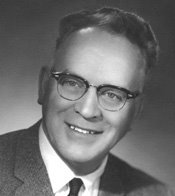
FROM THE OFFICE OF THE PRESIDENT:

As a privately held company, Modern Evil is not required to publicly report on any of its operations or activities. This blog is a faint reflection of our interests and opinions. Thank you.

~ Dr. Archibald T. Staph, Ph.D, President

Showing posts with label products. Show all posts

3.12.07

Skulls are Valued at an All-Time High

CATEGORY: Bones, Skeleton Supply

DIVISION: Products

COMMENTARY: As we've been explaining to customers for months now, the bone trade is a tricky business. Our skull supply has been spotty at best - and for this we apologize.

The following article captures the difficulties we face - we encourage our customers to give it a read and be patient with us. Thank you for your understanding.


Inside India's Underground Trade in Human Remains

By Scott Carney

A constable in a sweat-stained undershirt and checkered blue sarong lays a ragged cloth over a patch of mud. He jerks open the back door of a decrepit Indian-made Tata Sumo SUV — what passes for an evidence locker at this rustic police outpost in the Indian state of West Bengal. A hundred human skulls tumble out onto the cloth, making a hollow clatter as they fall to the ground. They've lost most of their teeth bouncing around the back of the truck. Bits of bone and enamel scatter like snowflakes around the growing pile. Standing next to the truck, the ranking officer smiles and lets out a satisfied grunt. "Now you can see how big the bone business is here," he says. I crouch down and pick up a skull. It's lighter than I expected. I hold it up to my nose. It smells like fried chicken.

Before the authorities intercepted it, this cache was moving along a well-established pipeline for human skeletal remains. For 150 years, India's bone trade has followed a route from remote Indian villages to the world's most distinguished medical schools.

Skeletons aren't easy to get. In the US, for instance, most corpses receive a prompt burial, and bodies donated to science usually end up on the dissection table, their bones sawed to pieces and destined for cremation. So most skeletons used for medical study come from overseas. Often they arrive without the informed consent of their former owners and in violation of the laws of their country of origin.

U.S. institutions pay a hefty price for human bones.

India has long been the world's primary source of bones used in medical study, renowned for producing specimens scrubbed to a pristine white patina and fitted with high-quality connecting hardware. In 1985, however, the Indian government outlawed the export of human remains, and the global supply of skeletons collapsed. Western countries turned to China and Eastern Europe, but those regions produce relatively few skeletons. They have little experience producing display-quality specimens, and their products are regarded as inferior.

Now, 22 years after India's export ban, there are signs that the trade never ended. Black-market vendors in West Bengal continue to supply human skeletons and skulls using the time-honored method: Rob graves, separate soft flesh from unyielding calcium, and deliver the bones to distributors — who assemble them and ship them to dealers around the globe.

Exports to North America are still small compared with pre-ban levels, but shipments are finding their way to American medical programs. Suppliers have ample incentive — it's a lucrative business. The skulls on the ground before me, for instance, would fetch an estimated $70,000 overseas.

The constable grabs the cloth by its corners and gathers the evidence into a bundle. "You know, I've never seen anything like this," he says. "I hope I don't again."

A massive low-pressure system over the Bay of Bengal is threatening to flood the state of West Bengal. Newspapers have already dubbed the storm a "watery apocalypse" after eight people drowned in floods before it even touched land. I'm driving to the tiny village of Purbasthali — about 80 miles outside of Kolkata, the state capital — the site of the processing plant where the police discovered their load of skulls. My rented Toyota Qualis gets stuck in the mud half a mile from the facility, so I jump out to make my way on foot. The sky is pitch-black, the rain suffocating. Toads the size of boxing gloves hop across the muddy track.

When police arrived to investigate last spring, they could smell the stench of rotting flesh from nearly a mile away. Sections of spine strung together with twine dangled from the rafters, an officer told me. Hundreds of bones were scattered on the floor in some sort of ordering system.

This bone factory had been operating for more than 100 years when two of its workers, drinking at a bar, bragged that they were hired to dig bodies out of graves. Shocked villagers dragged them to a police station, where they confessed. The workers said a man named Mukti Biswas ran the factory. The authorities knew him well. In 2006, police had arrested Biswas as the kingpin of a grave-robbing ring; he was released a day later, news reports said, "because of his political links." The police took him into custody once again, but he was let out on bail and has since taken flight.

After 10 minutes of slogging through the mud, I make out the flicker of a gas lamp. I peek into the doorway of a wood-frame house. A family of four sitting on the dirt floor stares back at me.

"Do you know Mukti Biswas?" I ask.

"The bastard still owes me money," replies Manoj Pal, a twentysomething man with a thin mustache. His family has been working at the bone factory for generations, he says. He offers to show me around, and we head out along the bank of the Bhagirathi River.

The processing plant is little more than a bamboo hut with a tarpaulin roof — one of a dozen bone factories Pal says he knows about. In April, the authorities confiscated piles of bones, buckets of hydrochloric acid, and two barrels full of a caustic chemical they have yet to identify. All that's left is a dirt floor with a large concrete vat sunk into the ground.

A third-generation bone trader, Biswas had no problem finding dead bodies. As caretaker of the village's cremation ground, he claimed to have a license to dispose of the dead. But police told reporters he was robbing graves. Biswas pilfered corpses from cemeteries, morgues, and funeral pyres; he would drag the deceased from the flames as soon as the families left. He employed almost a dozen people to shepherd the bones through the various stages of de-fleshing and curing. For this work, Pal says he earned $1.25 a day. He also received a bonus for keeping the bones from a given body together so they represented a biological individual rather than a mishmash of parts — a feature prized by doctors.

Pal explains the factory's production process. First the corpses were wrapped in netting and anchored in the river, where bacteria and fish reduced a body to a loose pile of bones and mush in a week or so. The crew then scrubbed the bones and boiled them in a cauldron of water and caustic soda to dissolve any remaining flesh. That left the calcium surfaces with a yellow tint. To bring them up to medical white, bones were then left in sunlight for a week before being soaked in hydrochloric acid.

Biswas sold complete skeletons wholesale for $45 to a medical supply company called Young Brothers, which wired the pieces together, painted on medical diagrams, and sawed away sections of the skulls to reveal internal structures. Then Young Brothers sold the bones to dealers around the world.

Shining my flashlight on the floor, I pick up a wet rag. The translator lets out a low hiss. "I hope you know that's a death shroud," he says. I drop the cloth and wipe my hand on my shirt.

The empirical study of human anatomy took off with Leonardo da Vinci's sketches in the 15th century; the earliest extant articulated skeleton dates from 1543. As medicine advanced, physicians were expected to have a systematic understanding of the human body's inner workings. By the beginning of the 19th century, Europe's demand for human remains far outstripped supply.

In England, home of many of the world's preeminent medical institutions, grave robbing became so commonplace that certain cemeteries were famous for battles between grieving families and marauding medical students. To contain the problem, the government passed the Anatomy Act of 1832, allowing doctors to take any corpse that was left unclaimed in a city morgue or hospital. The law put an end to grave robbery, but the supply of legal skeletons still couldn't keep up with demand. So British doctors looked to the colonies. In India, members of the dom caste, who traditionally performed cremations, were pressed into service processing bones. In the 1850s, Calcutta Medical College processed 900 skeletons a year, mostly for shipment abroad. A century later, a newly independent India dominated the world market for human bones.

In 1985, the Chicago Tribune reported that India had exported about 60,000 skulls and skeletons the year before. The supply was sufficient for every medical student in the developed world to buy a bone box along with their textbooks. Price: $300.

If most of the merchandise was stolen, at least exporting it was legal. "For years, we ran everything aboveboard," Bimalendu Bhattacharjee, a former president of the Indian Association of Exporters of Anatomical Specimens, told the Los Angeles Times in 1991. "No one advertised, but everyone knew it was going on." At their height, Kolkata's bone factories took in an estimated $1 million a year.

But it couldn't last. The graveyards of West Bengal were being picked clean, and the lure of ready money soon attracted criminal elements.

The industry shuddered to a halt in March 1985, when a bone trader was arrested after exporting 1,500 child skeletons. Because they're relatively rare and illustrate transitional stages in osteological development, child skeletons command higher prices. Indian newspapers claimed that children were being kidnapped and killed for their bones.

Panic spread with news of the arrest. In the months after the indictment, vigilantes combed the cities searching for members of the alleged kidnappers' network. In September, an Australian tourist was killed and a Japanese tourist was beaten by a mob after rumors spread that they were involved in the conspiracy. The attacks might have been enough to stall India's bone industry, but the government had already taken action: A few weeks earlier, India's Supreme Court interpreted the national Import/Export Control Act to prohibit the export of human tissue.

In the absence of competing suppliers in other countries, the court's decision effectively shut down international trade in human skeletons. Medical schools in the US and Europe begged the Indian government to reverse the export ban, to no avail.

Since then, natural human bone has been difficult to come by. The voracious demand for fresh cadavers in medical education consumes nearly all donated corpses in the US, and in any case, processing skeletons is a slow, messy business that few people care to take on. When high-quality specimens do become available, they tend to be costly. A complete skeleton in good condition now retails for several thousand dollars, and orders can take months, even years, to fulfill. Students no longer buy their own bone boxes; instead, schools usually keep an inventory that's replaced only when specimens are damaged or stolen. Stanford Medical School allocates half a skeleton, cleaved down the middle, for every two students. Such policies mean that many established institutions already have all the bones they need. The biggest buyers of skeletons are new and growing schools throughout the world that need to outfit their labs.

Some institutions have turned to plastic replicas. But artificial substitutes aren't ideal. "Plastic models are reproductions of a single specimen and don't include the range of variations found in real osteology," says Samuel Kennedy, who stocks the anatomy program at Harvard Medical School. Students trained on facsimiles never see these differences among individuals. Moreover, the models aren't entirely accurate. "The molding process doesn't capture the detail of a real specimen," Kennedy adds."This is especially critical in the skull."

In the US, major dealers like Kilgore International are making do selling replicas. "My father would have done almost anything to get back into the bone business," says Craig Kilgore, who runs the company his father founded. "He was legally blind but would still come to the office and write letters to anyone, anywhere in the world, that he felt could be of help to reopen the supply." His father, who died in 1995, didn't live to see the turnaround.

Tucked away on a side street between one of Kolkata's largest graveyards and one of its busiest hospitals, Young Brothers' headquarters looks more like an abandoned warehouse than a leading distributor of human skeletons. The rusted front gate appears to have been padlocked and forgotten a decade ago. Above the entrance, the company sign is a tableau of peeling paint.

It wasn't always this way. The building was bustling with activity in 2001, according to former Kolkata Health Department chief Javed Ahmed Khan. At the time, neighbors complained that the Young Brothers offices stank of death. Huge piles of bones lay drying on the roof. When the police refused to file a case, Khan raided the building with a posse of bamboo-wielding heavies.

"There were two rooms full of human skeletons," Khan recalls. It took five trucks to haul them away. He also seized thousands of documents, including invoices to companies all around the world. "They were sending shipments to Thailand, Brazil, Europe, and the United States," he says.

Sixteen years after the export ban, it was as if the law had never taken effect. "We used to fill orders all over the world," says a clerk employed by Young Brothers between 1999 and 2001, who requested anonymity. "We used to buy bones from Mukti Biswas. I saw more than 5,000 dead bodies." There were other suppliers, too, and factories up and down the length of West Bengal. The company took in roughly $15,000 a month. Khan's raid prompted the police to arrest Young Brothers' owner, Vinesh Aron. He spent two nights in jail before being released.

Today, there are no bones on the roof. I've been poking around the area for an hour or so, interviewing neighbors, when a white van pulls up to the building. A man dressed in a pink-checkered shirt steps out. He walks briskly to a side door and knocks: Vinesh Aron. Aron sees me snapping photos and knocks more forcefully, but the assistant inside is having trouble with the lock. As I try to formulate a question, my translator shoves a microphone in his face and asks whether he's still shipping skeletons to the West. Looking flustered, Aron blurts, "We won that case!" The entrance cracks open and he slips in before the door slams in my face.

In a subsequent phone conversation, Aron says he now sells medical models and charts, but no bones. However, a vendor of surgical instrument supplies who claims to be his brother-in-law says Young Brothers is the only bone distributor in the country. "My brother-in-law is the only man who still does this in India. He is the only one with guts," he says. Then he offers to dig up a skeleton for me for 1,000 rupees ($25).

The most recent Young Brothers catalog (2006-2007) takes care to inform customers that it abides by the law. It lists a wide assortment of bones at wholesale prices, noting that they're "for sale in India only." Indian skeletons are somehow making it out of the country anyway.

In Canada, Osta International sells human bones throughout the US and Europe. The 40-year-old company offers to fill orders immediately.

"About half of our business is in the States," says Christian Ruediger, who runs the business with his father, Hans.

Ruediger admits that Osta stocks bones from India, presumably smuggled out of the country in violation of the export law. Until a few years ago, he got them from a distributor in Paris, but that source dried up in 2001 — around the time Javed Khan raided Young Brothers. Since then, he has bought his stock from a middleman in Singapore. He declines to provide the name. "We want to keep a low profile," he says.

Of some 30 institutions I contacted in the course of researching this article, the handful that admitted to buying bones in the past few years declined to reveal their sources or speak on record. Osta's name came up twice. "I bought a complete skeleton and a dissected human demonstration skull from Osta," a professor at a prestigious Virginia college says. "Both were excellent."

Another Osta customer is a firm called Dentsply Rinn, which offers a plastic model head containing a real skull, used in training dentists.

"It's very difficult to procure human bones," marketing manager Kimberly Brown says. "Our requirements stipulate that the skulls must be of a certain size and grade and without certain anatomical defects. But we have no requirement for their origin."

Indian authorities express a similar lack of concern. Although the international bone trade violates the national export law and local statutes against grave desecration, officials look the other way."This is not a new thing," says Rajeev Kumar, West Bengal's deputy inspector general of police. "There's no evidence that they were killing people." The police took an interest in Biswas only because the bodies of a few important people went missing. "We are trying to implement the law based on the stress society places on it," he adds.

"Society does not see this as a very serious thing."

The need to study human bones in medicine is well established. The need to obtain the informed consent of people whose bones are studied is not. The reemergence of India's bone trade reflects the tension between these requirements. Someday doctors may develop a supply chain based on voluntary donation. Meanwhile, the bone factories of Kolkata are open for business.

17.9.07

So Many Products - So Little Time

IMPORTANT ANNOUNCEMENT

Modern Evil is soon to open their extensive Products & Services Catalogue to the public.


For the First Time Ever, you can own a fantastic evil product - hold it in your hands and put it to work for you.

With Modern Evil, you'll be able to finish that renovation, get that job promotion, enjoy a great relationship, have more success, get more money, and wallow in the abundance that you so richly deserve.

The Modern Evil Products & Services Catalogue is an innovative approach to the wonderful world of evil. It's ever-evolving list is your assurance of Consistent Quality Control, Leading Edge Technology, and Best of Breed Breakthroughs you've come to expect.

The Modern Evil Products & Services blogspace is now dedicated to that noble purpose - to bring to you the finest evil money can buy.

23.7.07

Death Bonds = Death Bets?

CATEGORY: Death Bonds

DIVISION: Products, Investments

EDITORIAL: In spite of the negative label "Death Bets", we see Death Bonds as a fantastic and profitable opportunity to capitalize on the coming baby boomer decline. Modern Evil Investments will provide an enticing product line for this bond service in the months to come.


Profiting From Mortality - The Death Bond

Business Week

Death bonds may be the most macabre investment scheme ever devised by Wall Street.

In May, as the subprime mortgage market was cracking, many of the biggest players in finance gathered at a conference in New York to talk about the next exotic investment coming down the pike: death bonds. When the event was held two years ago, just 250 people showed up. This time, nearly 600 descended on the Sheraton Hotel & Towers for the three-day confab, including delegations from Bear Stearns (BSC ), Deutsche Bank (DB ), Lehman Brothers (LEH ), Merrill Lynch (MER ), UBS (UBS ), Wachovia (WB ), Wells Fargo (WFC ), and other big firms.

They flocked to seminars with titles such as "Legislative Review," milled about the exhibition hall picking up the usual conference swag, and buzzed at luncheons and a Carnegie Hall gala about the big push into the market being made by Cantor Fitzgerald, a major bond-trading shop. With all the happy banter, you wouldn't have known they were there to learn about new and imaginative ways to profit from people dying.

Death bond is shorthand for a gentler term the industry prefers: life settlement-backed security. Whatever the name, it's as macabre an investing concept as Wall Street has ever cooked up. Some 90 million Americans own life insurance, but many of them find the premiums too expensive; others would simply prefer to cash in early. "Life settlements" are arrangements that offer people the chance to sell their policies to investors, who keep paying the premiums until the sellers die and then collect the payout. For the investors it's a ghoulish actuarial gamble: The quicker the death, the more profit is reaped. Most of the transactions are done by small local firms called life settlement providers, which in the past have typically sold the policies to hedge funds. Now, Wall Street sees huge profits in buying policies, throwing them into a pool, dividing the pool into bonds, and selling the bonds to pension funds, college endowments, and other professional investors. If the market develops as Wall Street expects, ordinary mutual funds will soon be able to get in on the action, too.

BUT THE INVESTMENT BANKS are wading into murky waters. The life settlements industry increasingly finds itself in the grip of dubious characters devising audacious and in some cases illegal schemes to make money. Many are targeting elderly people with deceptive sales pitches—so many that the National Association of Securities Dealers has issued a warning about abusive practices. Others are promising investors unrealistic returns or misleading them about the risks. Some are doing both.

That didn't discourage the high-powered guests at the New York conference, though. As they tossed back cocktails and dined on pan-seared filet mignon, they enthused about the market's possibilities. "Wall Street firms are here because they know this is an asset class that isn't going away," says David C. Dorr, president and CEO of Life-Exchange Inc. (LFXG ), an electronic platform for trading life settlements. "There's big potential."

The truth is, at this early stage, there's no way of knowing how popular death bonds might become. Wall Street's innovation machine has turned out both huge hits and big flops over the years. But the growth of the underlying market for life settlements has been torrid so far. In 2005 about $10 billion worth were transacted, according to Sanford C. Bernstein & Co. (AB ), up from virtually nothing in 2001.

Industry analysts say this number rose to $15 billion in 2006, and could double this year, to $30 billion. Over the next few decades, as the ranks of retirees swell, Bernstein predicts that the face value of life settlement deals will top $160 billion a year in today's dollars. Death bonds will never approach the size of the mortgage market, which saw $1.9 trillion of securities issued last year. But if Wall Street achieves its goal of turning most of the life settlements created each year into death bonds, the market could rival the size of today's junk-bond market, where issuance totaled $128 billion in 2006, up from $56 billion in 1996, according to market watcher Dealogic.

Investment banks have already drawn up their sales pitches to well-heeled institutional customers. Firms say death bonds should return around 8% a year, right between the expected returns of stocks and Treasury bonds. Moreover, they're "uncorrelated assets," meaning their performance isn't tied to what's happening in other markets. After all, death rates don't rise or fall based on what's happening to commodities, say. Uncorrelated assets like these are highly prized in an increasingly connected global financial system.

It all sounds great, except that many of the life settlements that Wall Street firms are buying fall into categories ranging from sketchy to toxic. "They are creating a very risky product," says Janet Tavakoli, a Chicago financial consultant who specializes in advising clients on asset-backed investments. "They may be planning to sell them to sophisticated investors, but they could be roping in people who don't appreciate the risk."

Many life settlement providers, for example, are trying to lure people who don't even hold insurance. In this tail-wagging-the-dog scenario, speculators take out policies on the individuals' behalf, pay them something up front, cover the premiums, and then wait for the people to die so they can collect. At the most outlandish extreme, one outfit devised a plan involving the population of the Federation of St. Kitts and Nevis in the Caribbean.

Investors, meanwhile, have been burned by operators who have misrepresented the profit potential on deals. Two men now awaiting trial in California hatched an allegedly fraudulent scheme aimed at the entire congregation of a black church in South Central Los Angeles. They promised investors 25% annual returns because African Americans die earlier than other racial groups—an ugly pitch that prosecutors say overstated the upside potential.

Even some of the biggest life settlement firms operate under a cloud. Philadelphia's Coventry First, for example, faces civil charges from the New York Attorney General's office and is in danger of being barred from doing business in Florida. It denies any wrongdoing.

The eight-year-old industry certainly has an ignominious history. It grew from the shards of the so-called viaticals business, which imploded in the late 1990s amid allegations of fraudulent dealings with AIDS patients and other terminally ill people. The word viatical comes from viaticum, a religious term for the communion given to a person near death. As AIDS spread during the 1980s, patients turned to the viatical settlements market to unlock insurance money to pay for care. But advances in medicine in the 1990s extended patients' lives, making viaticals less profitable for the buyers. At the same time, the industry was rife with abusive sales practices that drew the attention of prosecutors. By 1999, business had all but dried up.

Surprisingly little has changed in the latest iteration. Only 26 states require professional licensing for life settlement brokers; elsewhere, anyone can hang a shingle. The market is especially popular among former stockbrokers, mortgage brokers, insurance agents, and lawyers. But all sorts of people from small-time movie producers to dentists are setting up shop.

There's nothing inherently wrong with life settlements. In fact, for people who need quick cash or want to supplement their retirement nest eggs, the market can be a boon. Without it, a person looking to unload a policy would have only one choice: to sell it back to the insurer for the so-called cash surrender value, a fraction of the face value. "No one is forcing anyone to sell insurance policies," says Meir Eliav, president of Legacy Benefits Corp., a New York life settlements provider that was involved in one of the first death bond deals in the U.S., a $70 million offering in 2004. "This is a terrific option for the consumer."

Wall Street's intense interest says much about the world of high—and low—finance in 2007. In earlier eras, big firms' success or failure rested mainly on their ability to turn long-term client relationships into full-service operations—advising corporate clients on potential acquisitions, managing investments, and arranging financing. But Wall Street has been overtaken by securities trading and the endless creation of financial products, such as asset-backed bonds, collateralized debt obligations, credit default swaps, and other exotica.

Cast in that light, Wall Street's move into death bonds seems almost inevitable. Goldman Sachs (GS ) and the other firms consider these instruments the next stage in a trend that started with mortgage-backed securities in the 1970s and has since expanded to include everything from credit-card receivables to intellectual property. The term of art is "securitization," and it has become a multitrillion-dollar business. The mechanics are straightforward: Assets are pooled together and then sold off in the form of bonds or pieces of bonds. By collecting many different assets, the risk is dispersed: Even if a few don't pay off, the rest will. At least that's the theory.

ALREADY THERE'S a bustling market in Germany and London for unrated death bonds—that is, ones that aren't graded by big ratings agencies such as Moody's Investors Service (MCO ) or Standard & Poor's (which, like BusinessWeek, is a unit of The McGraw-Hill Companies (MHP )). So far there have been only two small rated deals in the U.S. But given how aggressively the banks are stockpiling life settlements, most market watchers expect big, rated deals to become commonplace soon, at which point mutual funds can dive in. "The product just lends itself to securitizations, like what has been done with mortgage-backed securities," says Philippe Hatstadt, who heads the new "longevity derivatives" group at Bear Stearns & Co (BSC ). Cantor Fitzgerald, one of Wall Street's savviest bond-trading shops, is rolling out an electronic trading platform for life settlements and, ultimately, death bonds. The LexNet platform has been in the works for more than a year and is a major priority inside Cantor, say insiders.

But the push into increasingly complicated securitizations carries with it ever greater risk. That's what Wall Street is dealing with now as bonds backed by pools of subprime mortgages blow up left and right. A surge in defaults on these riskiest of loans is battering the hedge funds that invested—and the banks that arranged, packaged, and sold them. In June, two Bear Stearns hedge funds that bet on bonds backed by subprime loans collapsed, sparking panic on Wall Street about the health of other risky investments. Tavakoli says the same kinds of missteps are bound to happen with death bonds. But Wall Street is good at justifying its moves into new lines of business, however iffy they might seem, notes Kenneth C. Froewiss, a professor of finance at New York University's Stern School of Business and a former JPMorgan Chase & Co. (JPM ) investment banker: "At the end of the day, what Wall Street does best is figuring out what investors might want and structuring products to meet those needs." And its own needs.

That's not to say it isn't aware of appearances. Wall Street is doing its best both to polish the life settlement industry's image and to downplay its own direct involvement. The New York conference was put on by the Life Insurance Settlement Assn. (LISA), an organization of market players that began as the Viatical Association of America in 1994, changed its name to the Viatical & Life Settlement Assn. in 2000, and then dropped the "viatical" altogether three years ago. In an attempt to put even more distance between Wall Street and the old viatical crowd, six investment houses, including Bear Stearns, Credit Suisse (CS ), Goldman Sachs (GS ), and UBS, in March formed a trade group called the Institutional Life Markets Assn. to lobby for "best practices" and "appropriate regulation."

Until some degree of legitimacy is in place, firms will keep as low a profile as possible. Goldman Sachs, for example, came close last year to acquiring San Diego's Life Settlement Solutions Inc., a large provider, but backed out at the last minute, according to people familiar with the potential deal. Instead, Goldman, which declined to comment for this story, is quietly building up its own subsidiary under the nondescript name Eastport Capital. That unit sent four representatives to the LISA conference.

It's no wonder that Wall Street is simultaneously attracted and cautious. The alchemy going on in the finance labs is real, but the market for life settlements is deeply troubled. There's a persistent problem with brokers offering lowball prices and failing to disclose transaction costs. The marketing to investors has often been suspect, too. In late 2005, for instance, the big accounting firm KPMG sent a cease-and-desist notice to Keydata Investment Services Ltd., a London firm that was using KPMG's name in its marketing material for unrated death bonds without permission. A Keydata official didn't return phone calls seeking comment. A KPMG spokesman says: "We do not endorse or recommend these products."

IMPROPER MARKETING is just one of the things that got two California men into trouble. Next March, Curtis D. Somoza and Robert A. Coberly are scheduled to go on trial in federal court in Los Angeles on charges that they bilked dozens of investors out of tens of millions of dollars in a scheme involving an African American church group in Los Angeles called the Personal Involvement Center. The men, whose lawyers declined to comment, raised $69 million for an investment trust called Persistence Capital, which arranged to buy policies from Transamerica Corp. on the lives of some 2,000 members of the inner-city church. The deal was structured so that Persistence would pay for the premiums, while the $275,000 death benefit on each policy would be split three ways: $15,000 to the deceased person's family to cover burial costs, $20,000 to the church group, and the remaining $240,000 to the trust. The trust's haul would go toward paying the premiums on the remaining policies and providing payouts to investors.

Somoza and Coberly pitched the deal to the Reverend J. Benjamin Hardwick as an opportunity for the 75-year-old pastor to get a modest death benefit for his mostly poor members and raise funds for the group's charitable works. Somoza and Co-berly sold it to investors as a way to score a high annual return of 25% because the church group's members "were predominantly African Americans and had a higher mortality rate than the average population," according to the indictment. Prosecutors say the pitch reflected inflated return assumptions. Hardwick didn't return several phone calls seeking comment.

Soon after the deal was set up, say prosecutors, Coberly and Somoza began looting the trust to buy mansions and sports cars. In September, 2005, a year after Persistence bought the policies from Transamerica, it was forced into bankruptcy by investors demanding their money back. Trying to salvage the scheme, Coberly and Somoza shopped the policies to other investors but could find no buyers. They were arrested in May, 2006, and charged with 27 counts of securities and wire fraud.

Coventry First has also been accused of wrongdoing. Last October Eliot Spitzer, in one of his final acts as New York's attorney general, charged the firm with cheating elderly insurance holders. In a civil suit in New York State Court, the now-governor accused Coventry, which buys life settlements and resells them, of making "dozens" of secret payments to brokers as a reward for not seeking competing bids. (The investigation is now overseen by Attorney General Andrew Cuomo.) Coventry CEO Alan Buerger says the lawsuit was based on "a handful of out-of-context e-mails."

True or not, the allegations against Coventry sent a shock wave through the life settlement business. Most damagingly, they torpedoed a planned $300 million death bond offering from a partnership formed by Coventry and Ritchie Capital, a hedge fund. The deal, which was to be underwritten by Lehman Brothers Inc (LEH )., would have been backed by a pool of life insurance policies with a face value of $1.16 billion, by far the largest U.S. death bond offering to date.

What's alarming is how far the deal had progressed before blowing up. Investors were cued up and ready to buy. On Oct. 10, 2006, Moody's (MCO ) even tagged the senior notes, which had a face value of $166 million, with a rating of A3, an investment-grade status that would have allowed ordinary mutual funds to pile in. Then the Coventry suit was filed, and Moody's quickly withdrew its rating, citing the "uncertainty surrounding the transaction." Michael N. Adler, a Moody's spokesman, says the firm wasn't aware Coventry was under investigation when it issued the rating. The 10-page report that accompanied the rating is no longer available to the public. In the report, obtained by BusinessWeek, Moody's said it believed that Coventry's "due diligence was adequate for the rating being requested." Jay Eisbruck, a Moody's managing director, stresses that "this is an asset class that we are very careful about."

What especially worries regulators are so-called stranger- initiated deals, in which an investor persuades people to take an expensive policy and lends them money for the premium. In the boldest example yet, an investor group pitched a bank on a deal involving all 45,000 residents of St. Kitts and Nevis. The promoters claimed the islands' government was on board. But the deal got a cool reception from Wall Street bankers, who all stress that they perform ample due diligence before buying policies. A government finance official said he had never heard of such a deal.

Yet hedge funds and other finance firms have been diving into other stranger-initiated deals in the past two years, wooing seniors into taking out policies by offering cruises and other gifts. Industry sources estimate that $10 billion to $20 billion in such policies have been created since 2004. Some state insurance commissioners have joined with insurers in calling for a crackdown.

Amazingly, such problems have merely delayed the emergence of death bonds, not derailed it. G. Andrew Karolyi, a finance professor at Ohio State University's Fischer College of Business who specializes in international markets, says Wall Street's interest is predictable given the "demographic bubble" of aging baby boomers, many of whom will be looking to cash in insurance policies. "For investment banks," he says, "all of this sounds like an opportunity to make money." Tavakoli, the securitization consultant, is more blunt. The idea of death bonds, she says, "creeps me out."

How Death Bonds Work

CATEGORY: Death Bonds, How-To

DIVISION: Products, Investments

NOTE: This instructional brief is meant as a quick overview on how Death Bonds work. For more details, consult a professional broker [coming soon to Modern Evil].


Profiting from Mortality

Death bonds may be the most macabre scheme ever. Investors buy up life insurance policies, securitize them, and collect when the insured persons die.


The Seller

A person, typically 70 or older, who wants to cash out of a life insurance policy hires a "life settlement" broker to find prospective buyers. The buyers keep paying the premiums until the seller dies, and then they collect. The up-front payout to the seller varies widely, from 20% of the death benefit to 40%.


The Broker

A person paid to link buyers and sellers, this player typically seeks three bids from specialty finance firms called life settlement providers, which are often financed by hedge funds and investment banks. Commissions, paid by the seller, usually range from 5% to 6%.


The Provider

The life settlement provider resells the insurance policy to a hedge fund or investment bank, which warehouses it in order to build a big pool of policies.


The Investment Bank/Hedge Fund

After a bank or hedge fund collects a sufficient number of policies, typically 200, it turns them into asset-backed securities called death bonds to sell to investors. The pitch: Death bonds will produce steady returns (around 8%) and aren't correlated with stocks, bonds, commodities, or other investments.


The Investor

Hedge funds and other big investors are already buying up death bonds in Europe and expect a big bond issue in the U.S. soon. Institutional investors are especially attracted to uncorrelated assets, which make their portfolios less volatile.


The Bond Rater

Big debt-rating agencies such as Moody's Investors Service and Fitch Ratings are soon expected to start issuing ratings on death bonds in the U.S., opening the market to other big investors including mutual funds. Moody's has already rated at least one death bond issue, although it subsequently pulled the rating when the provider was charged with fraud.

20.6.07

BeautyKit - The Prototype

CATEGORY: Beauty, DIY

DIVISION: Products, R&D

NOTE: Response to test marketing is how we at Modern Evil deliver the best products in the quickest fashion to you, our valued customer.

While not quite ready yet for sale, the overwhelming demand for "BeautyKit" has forced our Research & Development Division to work overtime in order to bring you this fine product exclusively for the coming fall season.